Start with pani puri and chaat while the lines are short, go for dosa or biryani as your main, and finish with jalebi, kulfi and a masala chai. Over 30 vendors cover every region, and most take cards, but carry a little cash.
In this postHow to eat your way through 30 vendors
Thirty-plus vendors is a lot of menu, and nobody has the stomach for all of it. The trick is to order small, share everything and move in a loop: snacks first, one proper plate, then sweets. These are the ten things our own team queues for every year, in the order we eat them.
The snacks: 1 to 4
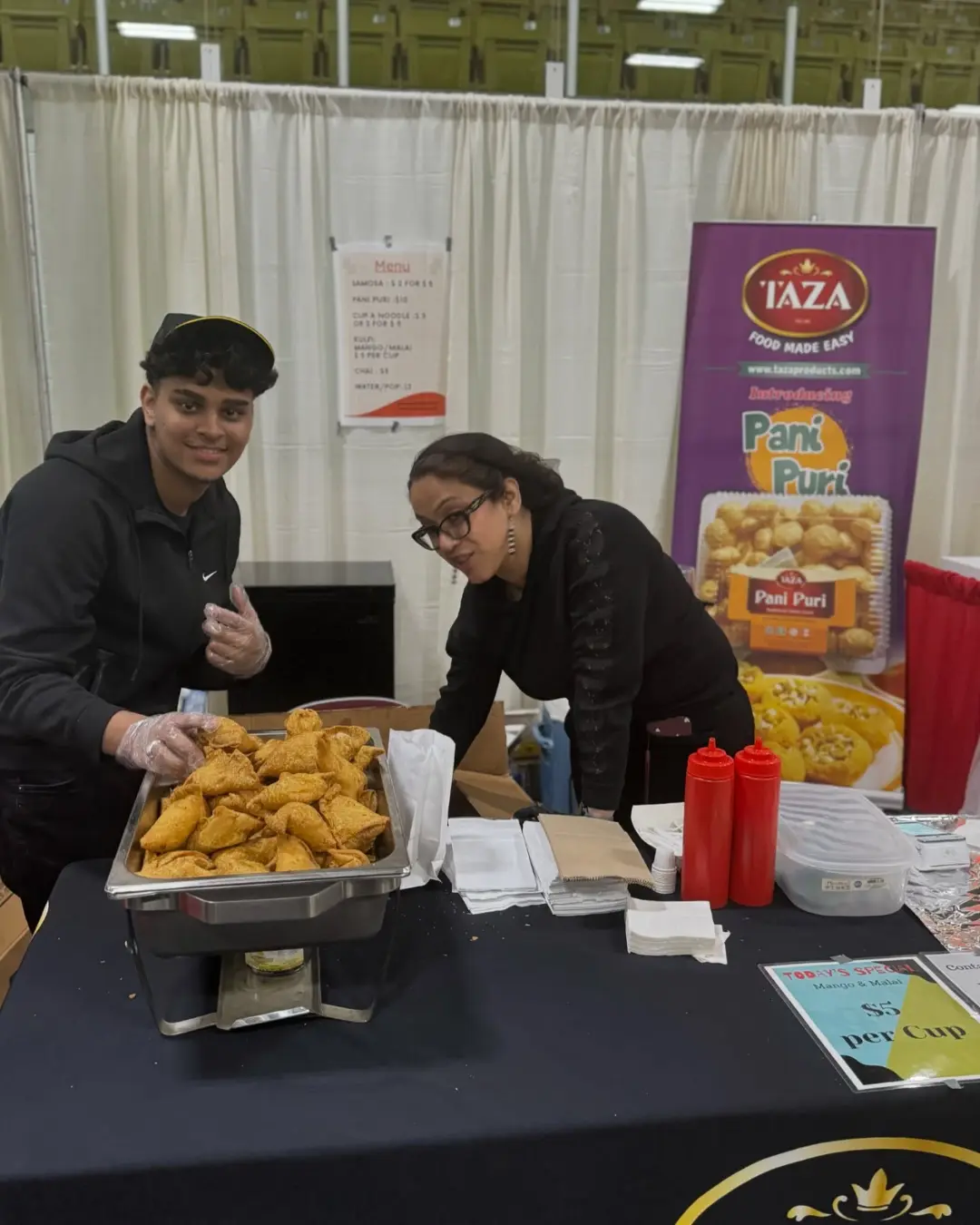
Pani puri is the pavilion’s unofficial welcome: crisp shells, spiced water, eaten standing up in one bite. Vada pav is Mumbai’s potato fritter in a bun with garlic chutney, cheap and fast. Chaat (papdi, bhel or dahi puri) is crunchy, tangy, cold yogurt against hot chutney; share one, then order your own. The samosa needs no introduction, but ask for the chutney on the side so it stays crisp.
The plates: 5 to 7
A dosa is a South Indian crepe the length of your arm, served with sambar and coconut chutney. Chole bhature, Punjab’s spiced chickpeas with a puffed fried bread, is a sit-down plate, so order it before the finale, not after. Biryani comes Hyderabadi or Lucknowi depending on the vendor; ask which, and they will happily tell you why theirs is better. If you want to eat on the move, the kathi roll wraps spiced paneer or chicken in an egg-washed paratha.
The sweets: 8 to 10
Jalebi: hot, syrupy spirals, best with a cup of chai. Kulfi: dense, slow-churned ice cream on a stick, pistachio or mango. Masala chai is the last thing you buy before the dance party. Pair it with a chilled lassi earlier in the day and you have covered both ends of the thermometer.
Vegetarian, halal and allergies
Most stalls are vegetarian-friendly and clearly labelled; many are halal. If you have an allergy, ask the vendor directly: these are small kitchens and they know every ingredient in the pot.